Learn about the risks that a solar eclipse poses to your eyes and vision with the specialists at Oftalmedic Salvà.
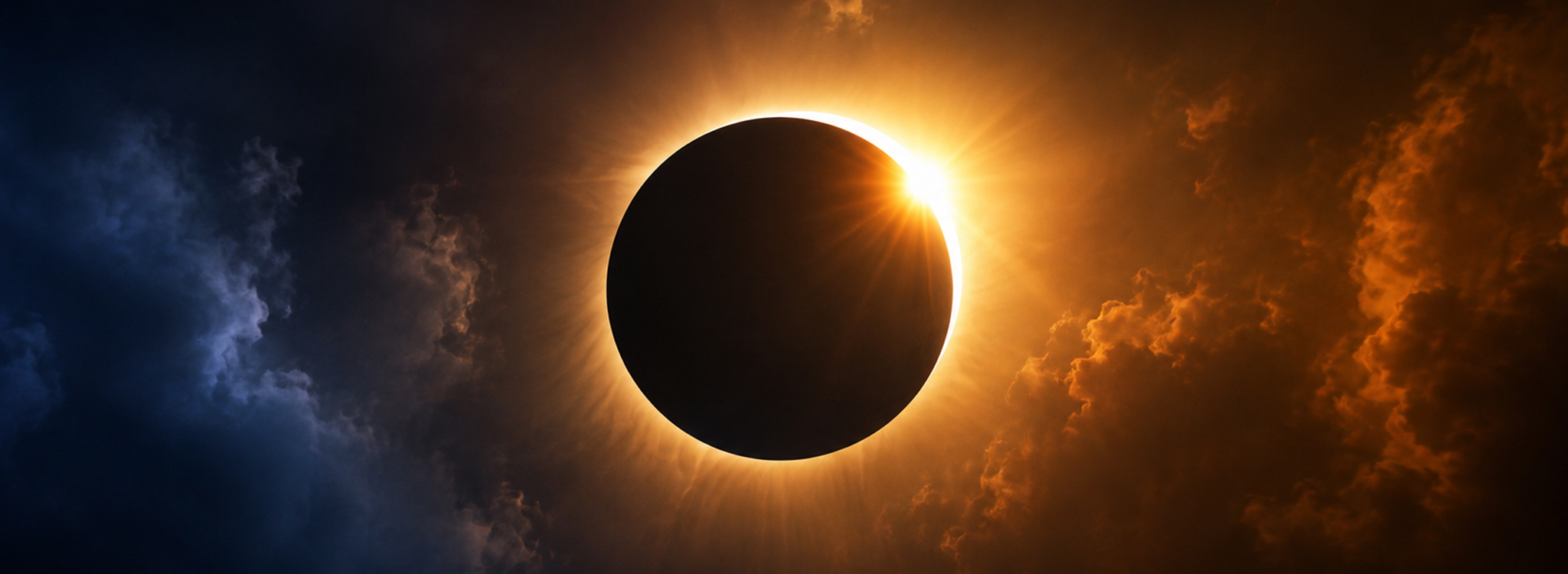
On 12 August, thousands of people across Spain will look up to witness the solar eclipse. As this remarkable astronomical event approaches, Oftalmedic Salvà urges everyone to take appropriate precautions, reminding the public that looking directly at the Sun without proper eye protection can cause irreversible damage to the retina.
Although daylight appears dimmer during an eclipse, solar radiation remains intense enough to cause solar retinopathy—an injury affecting the macula, the central part of the retina responsible for sharp, detailed vision. In some cases, this damage may result in permanent vision loss.
“A solar eclipse is a fascinating phenomenon and well worth experiencing, but never at the expense of your eye health. A momentary lapse in caution can lead to retinal damage with irreversible consequences for vision,” explains Dr. Luis Salvà Ladaria, Medical Director of Oftalmedic Salvà.
Specialists warn that one of the greatest risks during a solar eclipse is the false sense of safety created by the temporary reduction in brightness. “Many people assume that because the Sun appears less bright, the danger has disappeared. However, solar radiation is still capable of damaging the retina even when the Sun is partially covered. Furthermore, the retina has no pain receptors, so the injury can occur without the person noticing anything at the time,” adds Dr. Salvà.
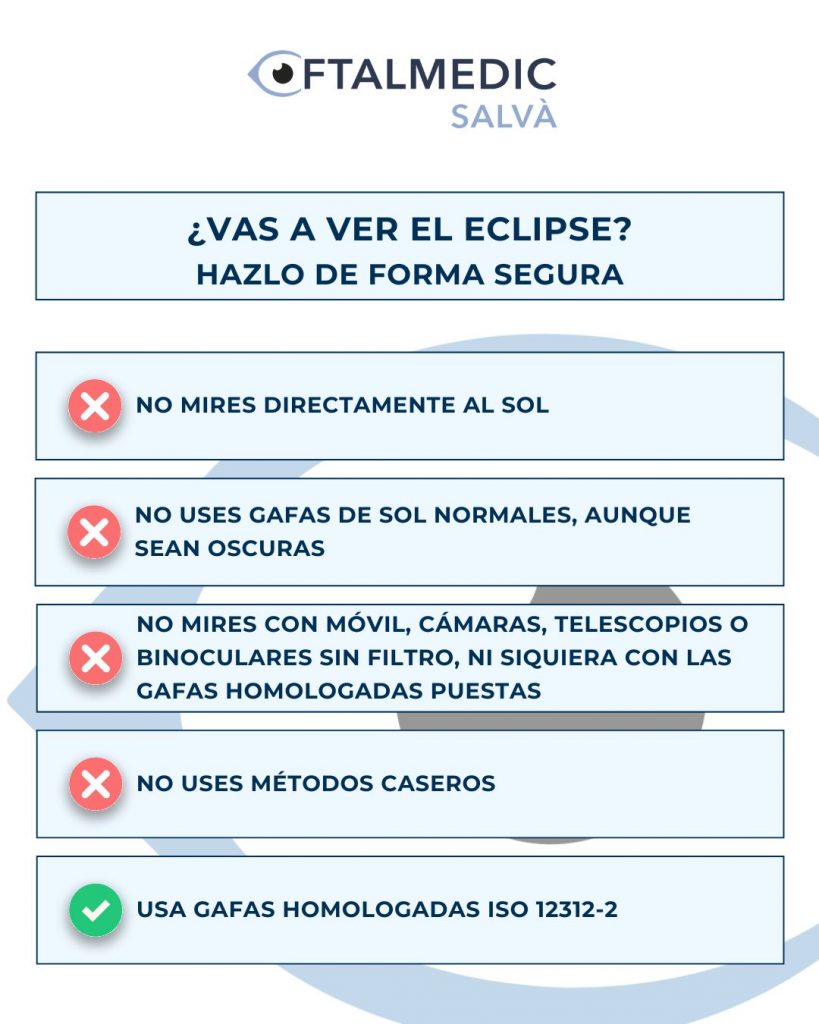
Five Tips for Watching the Eclipse Safely
The specialists at Oftalmedic Salvà recommend following these simple precautions to protect your eyesight:
- Use only eclipse glasses that comply with the international ISO 12312-2 safety standard.
- Never look directly at the Sun without proper protection, even for just a few seconds.
- Do not use ordinary sunglasses, X-ray films, smoked glass, photographic negatives, CDs, DVDs, or any homemade filters, as these do not provide adequate protection.
- If using binoculars, telescopes, or cameras, they must be fitted with certified solar filters. Do not look through these devices while wearing eclipse glasses alone, as this can result in even more severe retinal damage.
- Children should always observe the eclipse under adult supervision.
Symptoms That Require an Eye Examination
Anyone who experiences any of the following symptoms after viewing the eclipse should seek an ophthalmological examination as soon as possible: blurred visión, difficulty focusing, a dark or bright spot in the centre of the visual field, changes in colour perception, reduced visual acuity.
“In many cases, prevention avoids problems that could affect a patient’s vision for the rest of their life. The best way to enjoy the eclipse is to do so responsibly and always with the appropriate eye protection,” concludes Dr. Luis Salvà.
Through this initiative, Oftalmedic Salvà reaffirms its commitment to promoting eye health by providing the public with evidence-based recommendations, helping everyone enjoy this extraordinary astronomical event without putting their vision at risk.